
VCT EMEA Kickoff Qualifier 2027 Format Sparks Backlash Over Competitive Fairness
Riot Games has revised the VCT EMEA Europe Kickoff Qualifier 2027 format following criticism over the competitive advantages given to invited teams. The original playoff structure placed eight invited teams in the Upper Bracket, while the eight teams advancing through the Open Qualifiers were required to start in the Lower Bracket, raising concerns about competitive fairness and transparency.

The controversy emerged in late October as the community examined the format ahead of the November qualifiers. What began as a debate over bracket placement quickly developed into broader questions about Riot’s commitment to providing meaningful opportunities for teams outside the VCT partnership system. This guide explains the VCT EMEA Kickoff Qualifier 2027 format, what changed and why the community pushed back.
The Original VCT EMEA Kickoff Qualifier 2027 Format Created Two Different Paths to the Playoffs
Under the original format announced on October 15, the 16-team playoff stage would consist of eight invited non-partner teams and eight teams advancing through two Open Qualifiers. The invited teams were selected based on their competitive standing and performances in 2026, while the remaining teams had to earn their places through single-elimination qualifiers.
The issue arose when the bracket arrangement revealed that invited teams would begin in the Upper Bracket, while Open Qualifier teams would enter directly into the Lower Bracket.
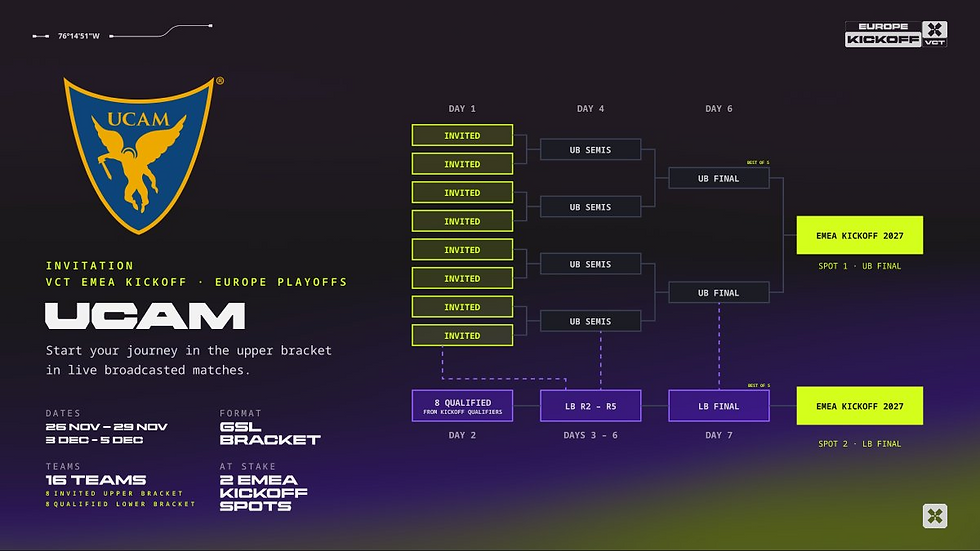
This distinction created significantly different levels of risk. Teams in the Upper Bracket could lose a match and continue their campaigns through the Lower Bracket. For Open Qualifier teams, however, a single defeat in their opening playoff match would mean immediate elimination.
Both groups were competing for the same two places at VCT EMEA Kickoff 2027, but they faced different conditions once they reached the playoffs.
Criticism focused on whether previous results should justify not only an invitation but also a more favorable starting position. While rewarding established teams for their 2026 performances is not inherently unreasonable, critics argued that the additional advantage undermined the value of qualifying through the open circuit.
Why the Format Drew Criticism From the EMEA Community
Several figures from the EMEA VALORANT scene questioned the competitive implications of the proposed structure.
The format also drew a pointed response from Josh “jtay” Taylor, assistant coach of G2 Gozen in Game Changers, who mocked the apparent disparity between invited teams and those advancing through the Open Qualifiers:
“Every team is equal, but some teams are more equal than others.”
Team Liquid assistant coach Daniel “yaotziN” Roczniak raised concerns about the invitation criteria and the advantages granted to invited teams.
Strategic coach Martin “Anderzz” Schelasin, who has previously worked with Fnatic, G2 Esports, and Paper Rex, also criticized the structure, arguing that it undermined competitive equity and misrepresented the idea of an open ecosystem.
The central argument was that earning an invitation and receiving a more favorable playoff position were two separate advantages. Riot could recognize previous achievements without necessarily placing Open Qualifier teams in a position where their first playoff defeat would end their campaign.
The timing of the disclosure added to the backlash. Although Riot had announced a modified double-elimination format on October 15, the implications of the Upper Bracket and Lower Bracket split became widely apparent after UCAM Esports published its invitation graphic.
The controversy also extended to the qualifier rulebook. Sheep Esports reported concerns over restrictions on technical pauses, raising questions about how teams would handle disconnections or technical disruptions during matches. These concerns added another layer to the discussion about the clarity and consistency of the tournament rules.
Riot Revises the Playoff Structure
On October 27, VALORANT Esports Product Manager for EMEA Tomek Borowka acknowledged the community’s feedback on X and confirmed that Riot would review the format.

Under the reported format, teams would advance after recording three wins or be eliminated after three losses. Eight teams would progress to two separate single-elimination brackets, with each bracket winner securing one of the two available places at VCT EMEA Kickoff 2027.
The revision addressed the central criticism by removing the initial separation between invited teams and Open Qualifier teams. Instead of entering different brackets based on their qualification routes, all 16 teams would compete through the same Swiss Stage before advancing to the final playoff phase.
However, the change did not resolve every question surrounding the selection of invited teams or the broader concerns raised about the rulebook. The final implementation and clarity of the regulations would remain important as the qualifiers approached.
A Challenge for VCT’s 2027 Transition
The controversy highlights a broader challenge facing Riot as the VCT moves toward a more open competitive ecosystem in 2027.
In EMEA, the Kickoff field will feature eight partnered organizations and four teams qualifying through regional pathways. The new system is intended to provide non-partner teams with more opportunities to progress toward regional and international competition.

However, the EMEA qualifier controversy demonstrates that expanding access is only part of the equation. The rules governing advancement must also provide a credible competitive pathway for teams entering through Open Qualifiers.
Invitations and performance-based advantages can recognize previous achievements, but their criteria and consequences need to be clearly communicated. When those advantages substantially affect the consequences of winning and losing, they risk undermining confidence in the qualification process.
The revised Swiss Stage represents a response to that criticism. Whether it proves effective will depend on its implementation and Riot’s ability to maintain transparent, consistent qualification rules throughout the 2027 season.


