
VALORANT Challengers 2026 Korea Split 1 Recap
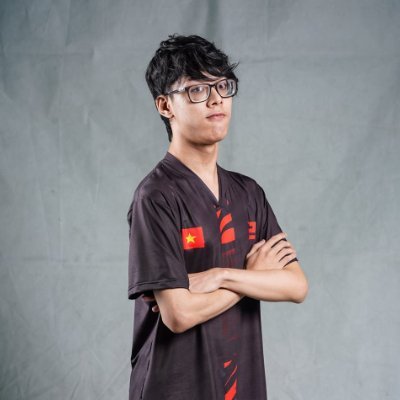
The VALORANT Challengers 2026 Korea Split 1 recap delivers exactly what fans expected: a highly structured, system-driven competition that showcased the depth of Korea’s tier-two ecosystem. Featuring eight teams in a single round-robin format, the split became a proving ground for academy rosters and rising domestic contenders.
Regular Season – Where Academy Teams Set the Pace
The split began with an eight-team single round-robin regular season, with all matches played in a Best-of-3 format. Only the top six teams advanced to playoffs, while the top two secured direct byes into the Upper Bracket Semifinals.
This format emphasized consistency and strong fundamentals, and two teams quickly separated themselves:
T1 Academy’s Near-Flawless Control
T1 Academy emerged as the most dominant team in the regular season, finishing with an 8-1 map record and a +49 round differential, the best in the league.
Their success was built on:
Highly refined defaults
Excellent utility layering
Fast but controlled mid-round calls
Strong role discipline
Rather than relying on individual brilliance, T1.A showcased one of the most complete systems in the tournament.
Dplus Remains the Closest Challenger
Dplus followed closely with a 6-2 record, establishing themselves as the primary challenger to T1 Academy.
Their strengths included:
Strong defensive fundamentals
Stable mid-rounding
Reliable site anchoring
While T1 controlled tempo, Dplus excelled through discipline and late-round execution.
The Middle Pack – Korea’s Most Competitive Battle
The race for playoff spots defined the regular season.
ONSIDE GAMING bounced back from a slow start to finish third (5-4)
Gen.G Global Academy, DRX Academy, and ARETE were locked in a tight race
Map and round differentials often decided placements
This highlighted the growing depth of Korea’s tier-two scene, where even academy teams struggled to maintain consistency.
At the bottom, Mir Gaming and FEARX failed to keep pace due to weaker macro play and limited map pools.
Playoffs – Discipline Under Pressure
The six-team double-elimination playoff bracket shifted the focus from consistency to execution under pressure.
With top seeds receiving byes, regular season performance provided a crucial advantage.
Korea’s identity became clear during playoffs:
Teams won through systems first, heroics second.
Grand Final – ONSIDE GAMING Claim the Title
ONSIDE GAMING vs Gen.G Global Academy
The Grand Final saw ONSIDE GAMING defeat Gen.G Global Academy 3-0, securing the Split 1 championship in a performance defined by composure and precision.
Map 1 – Lotus (13-10)
ONSIDE established control early with superior mid-round adjustments.
Wolverine delivered 22 kills
Ray and Xiesta closed key rounds
The map set the tone for ONSIDE’s ability to convert small advantages into wins.
Map 2 – Bind (13-4)
ONSIDE dominated completely, showcasing superior preparation.
Ray posted 340 ACS (+10 differential)
Xiesta matched impact with another +10 performance
This map highlighted ONSIDE’s anti-stratting and tactical depth.
Map 3 – Decider (14-12 OT)
Gen.G pushed back, but ONSIDE remained composed.
Wolverine and Xiesta combined for 45 kills
ONSIDE closed out the series in overtime
The map reinforced why ONSIDE were the better team in high-pressure moments.
Finals MVP – Xiesta
Xiesta was named Finals MVP after delivering consistent impact across the series, particularly in high-pressure rounds. His performance was crucial in securing ONSIDE’s dominant title victory.
Final Placements
1st – ONSIDE GAMING: ₩15,000,000 (~$10,200)
2nd – Gen.G Global Academy: ₩9,000,000 (~$6,100)
3rd – T1 Academy: ₩5,500,000 (~$3,800)
4th – Dplus: ₩4,000,000 (~$2,800)
5th–6th – DRX Academy / ARETE: ₩3,000,000 each (~$2,000)
7th – Mir Gaming: ₩2,000,000 (~$1,400)
8th – FEARX: ₩2,000,000 (~$1,400)
Conclusion
The VALORANT Challengers Korea Split 1 recap highlights a region defined by precision, discipline, and structure.
While academy teams like T1 Academy set the early pace, it was ONSIDE GAMING that proved adaptability and composure matter most under pressure.
With Split 2 approaching, the narrowing gap between academy teams and rising contenders promises an even more competitive future for Korean VALORANT.


